

Most of us take our daily routines for granted, performing them almost automatically. However, if you have aging parents, you might suddenly notice when these basic activities of daily living become a struggle for them. It often begins with small changes: taking longer to get dressed, needing more time to bathe, or having trouble preparing meals. If left unaddressed, these subtle challenges can quickly escalate into much larger issues.
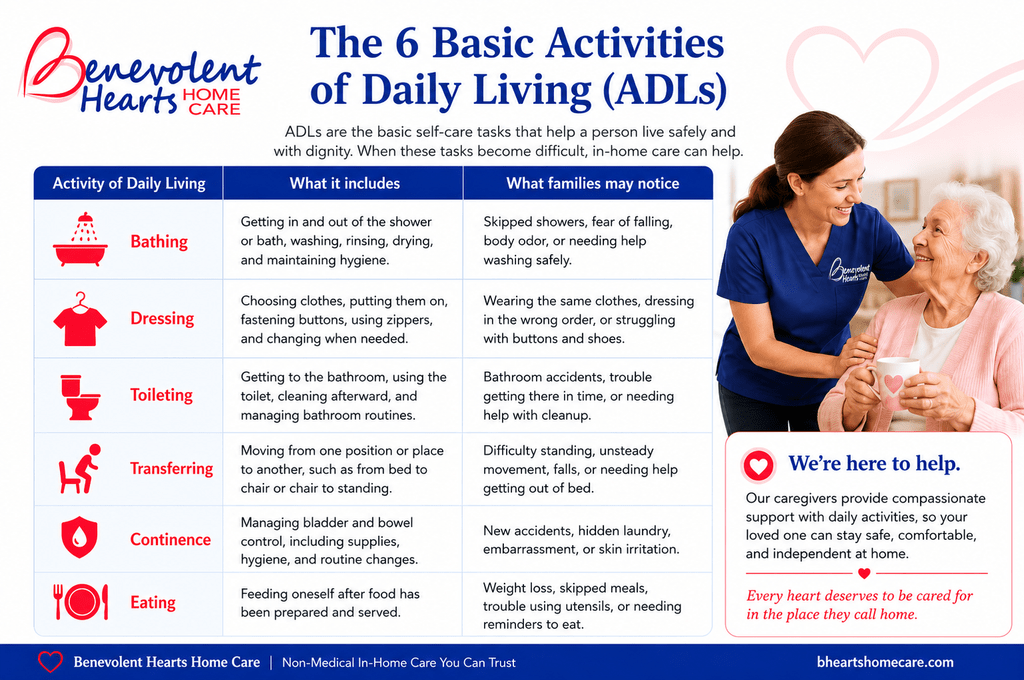
Activities of Daily Living are basic personal tasks that people need to do every day to manage their lives. Examples include bathing, dressing, toileting, transferring, moving from one place to another, and eating. When these tasks become difficult for older people to accomplish, then a more intensive form of care is needed.
A loved one may need help with one ADL or several ADLs, as each situation is different. The amount of help needed can also increase over time.
Key takeaway: Activities of Daily Living are the basic self-care tasks a person needs to manage daily life, such as bathing, dressing, toileting, transferring, continence, and eating. When these tasks become difficult, in-home care can help seniors stay safe, comfortable, and independent at home.
The 6 basic Activities of Daily Living
Most care conversations focus on six basic ADLs, which are bathing, dressing, toileting, transferring, continence, and eating. These give families a slightly better way to communicate the support level that might be needed for a family member.
Why ADLs matter for families
ADLs give families a clearer way to describe what is changing at home. Instead of saying, “Mom needs more help,” you can say, “Mom is still eating on her own, but she needs help bathing and getting dressed.”
This is important because understanding exactly what kind of assistance is required will help you understand how many times per week or day that assistance will be needed, and where, when, and if it should occur in the morning, evening, nighttime, or during the day.
Using ADLs also gives families an opportunity to develop plans for their loved ones’ care before they require emergency care. Providing minimal amounts of assistance at the proper time can reduce the family’s stress levels, enhance the individual’s safety, and allow them to continue living independently in their own home for longer periods of time.
A helpful way to think about it
ADLs show what kind of help your loved one needs with personal care.
The goal is not to take over everything. The goal is to provide the right level of support so your loved one can stay safe, respected, and as independent as possible.
ADLs vs. IADLs: What is the difference?
Activities of daily living (ADL) are routine self-care activities. Instrumental activities of daily living (IADL) are more complex and enable an individual to maintain absolute independence in their lives. For example, your father could have the ability to perform his own basic ADLs such as bathing and dressing himself yet be unable to accomplish some IADLs such as driving safely, purchasing groceries, preparing meals, or remembering to take his medication.
| Daily task type | What it means | Examples |
|---|---|---|
| ADLs | Basic self-care tasks | Bathing, dressing, toileting, transferring, continence, eating |
| IADLs | More complex daily living tasks | Meal preparation, transportation, medication reminders, errands, housekeeping, shopping |
Family tip: A loved one may need home care even if they can still complete most basic ADLs. Trouble with meals, medication routines, transportation, or fall risk can still affect safety at home.
Signs your loved one may need help with ADLs
Changes in daily living activities can occur over a long period of time. Families may be adjusting to meet their loved one’s needs so quietly that they don’t realize just how much support they have been offering. The changes may also become apparent as you notice it takes longer for them to complete a visit due to help required with daily activities such as bathing, laundry, meals, or mobility. They may also hide their struggles from others, including family members and friends, out of embarrassment and fear of losing their independence.
- Skipped bathing
- Same clothes worn often
- Body odor or poor grooming
- Falls or near falls
- Trouble standing
- Fear of showering alone
- Missed meals
- Medication confusion
- Less interest in normal routines
How ADL needs can change over time
Many people only need a little help at first. Just a little something here and there. That could mean things like assistance with bathing a couple of times a week or someone nearby to help them safely get in and out of bed or a chair.
As time goes on, those needs can change. Someone recovering from surgery may only need short-term support. Someone living with dementia may need more help as memory and decision-making become more difficult. Others may need extra assistance with balance and mobility start to drastically decline. You might even consider adding a small home elevator to your home to assist with omving around the house.
The key is to look for patterns. One bad day doesn’t always mean something has changed. But if the same daily tasks keep becoming more difficult, it may be time to consider additional support.
ADL support levels
| Support level | What it may look like | Care approach |
|---|---|---|
| Independent | The person completes the task safely without help. | Monitor for changes and support routines. |
| Reminder support | The person can do the task but needs prompting. | Use gentle reminders and routine-based support. |
| Standby support | The person does the task but needs someone nearby for safety. | Help reduce fall risk and build confidence. |
| Hands-on support | The person needs physical help with part or all of the task. | Provide personal care with dignity and clear communication. |
| Full support | The person cannot safely complete the task without help. | Create a more consistent care plan. |
How home care can help with ADLs
Home care lets many seniors continue living in a place they cherish and know well and get extra support too. For most families, the aim is to help a loved one stay safe, comfortable, and as independent as possible at home. Depending on what is happening, a caregiver can help with bathing and personal care, preparing meals, reminding about medicine times, moving safely around the house, transportation, human company and other daily tasks.
Plans for care should always be based on each person’s individual needs, preferences, routine, and level of independence.
| Need at home | How home care can help |
|---|---|
| Bathing and grooming | Support safe bathing, dressing, hygiene, and personal routines. |
| Meal routines | Prepare meals, encourage eating, and help keep daily nutrition on track. |
| Medication routine | Provide timely reminders so medication routines are easier to follow. |
| Mobility and transfers | Offer standby or hands-on support when moving through the home. |
| Companionship | Reduce isolation and provide emotional support through regular visits. |
| Transportation | Help with appointments, errands, grocery shopping, and social outings. |
| Family caregiver relief | Provide respite care so family caregivers can rest, work, or manage other responsibilities. |
Why ADL support can reduce safety risks at home
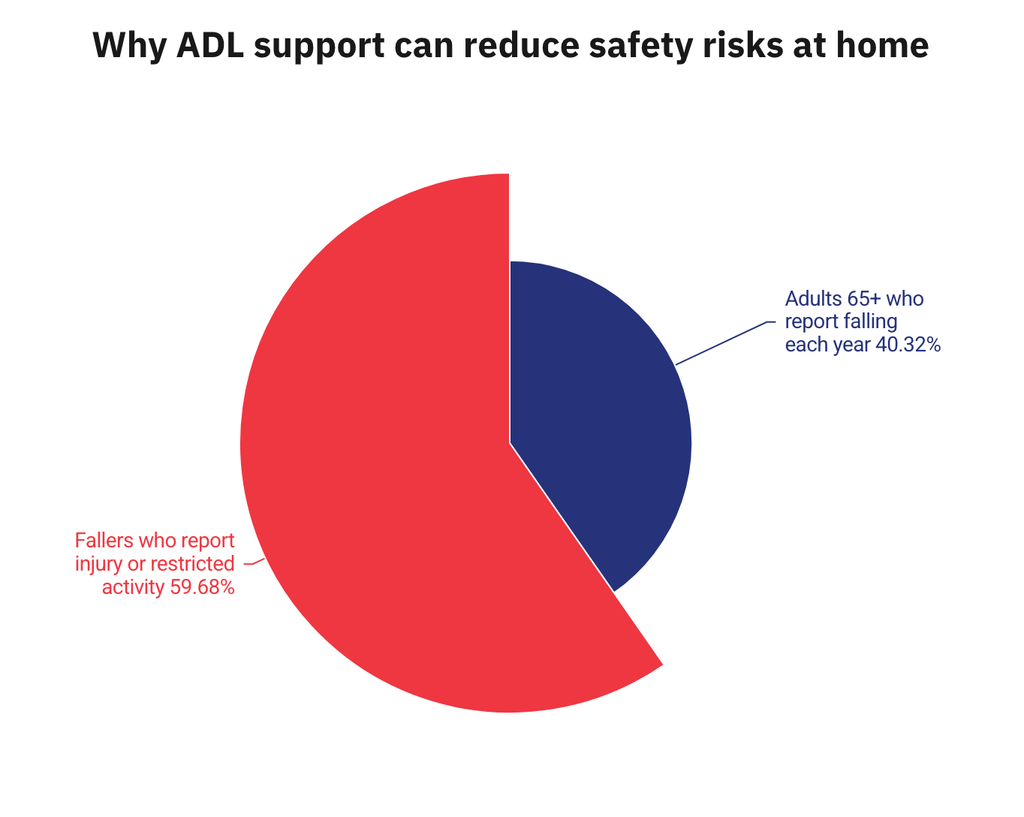
According to CDC data, it matters to keep things as safe as possible with older adults’ daily routines. More than 14 million adults aged 65 and older report falling each year, and approximately 37% of older adults report an injury caused by a fall, which results in needing medical care or limiting their ability to do normal daily routine work for at least a full day.
| Older adult fall statistic | Percentage |
|---|---|
| Adults 65+ who report falling each year | 25% |
| Fallers who report injury or restricted activity | 37% |
Family tip: ADL support is not only about completing daily tasks. It can also help reduce safety risks during the moments when falls are more likely, such as bathing, toileting, standing, and transferring.
When ADL changes may signal a safety concern
Some ADL changes can have more of an effect than others. If your family member only needs assistance with buttoning a shirt, this will likely only require minimal assistance. If your family member has difficulty getting to the restroom safely, eating, or has fallen while transferring from one place to another, an urgent care plan may be necessary.
Your family members should keep a watchful eye as some ADL changes pose a risk to safety and/or nutrition, hygiene , the ability to follow a prescribed medication routine, and the ability to remain alone at home.
Safety signs worth taking seriously
- ✓ Falls or near falls during bathing, toileting, or transfers.
- ✓ Missed meals, weight loss, or spoiled food in the refrigerator.
- ✓ Missed medication doses or confusion about medication timing.
- ✓ Poor hygiene, skin irritation, or repeated clothing accidents.
- ✓ Wandering, confusion, or unsafe decisions related to memory loss.
- ✓ Family caregivers feeling exhausted or unable to keep up.
How to talk with your loved one about ADL support
Discussions about caring for an elderly person often become sensitive, and many senior citizens fear they will lose their autonomy if they accept assistance. The family can reduce the stress associated with these discussions by emphasizing the importance of maintaining the older adult’s safety and comfort, as well as maintaining their level of independence.
Begin the conversation by identifying those things your elderly loved one would like to continue doing. Once you have identified these activities, then describe how a small amount of assistance will enable your loved one to maintain these routines.
Besides simply stating, “You can no longer perform this,” express your desire by saying something like, “We want you to remain safe in your home, and a little assistance with bathing may provide you with the ability to be safe at home.”
Helpful language: “This is not about taking independence away. This is about adding support so you can keep living at home with less stress.”
Questions to ask before starting home care
A clear care plan starts with clear questions. Families should explain what they see at home and ask how the home care team would support those needs.
| Question | Why it helps |
|---|---|
| Which ADLs does my loved one need help with? | This clarifies whether the need is light support, personal care, or more consistent care. |
| What time of day is hardest? | Morning, evening, overnight, and weekend needs can look different. |
| Can the caregiver help with personal care? | Families should confirm which tasks the care plan can include. |
| How are changes reported to the family? | Ongoing communication helps families adjust care when needs change. |
| What happens if needs increase? | The care plan should be flexible enough to respond to changing routines. |
| Can care support dementia-related routines? | Memory changes may require consistency, patience, and familiar routines. |
How Benevolent Hearts Home Care supports daily living at home
Benevolent Hearts Home Care provides non-medical home care for seniors in Tarrant County. Our team supports families with personal care, companion care, medication reminders, meal preparation, dementia care, transportation, respite care, 24-hour care, and fall prevention.
Care starts with understanding the person. That means looking at what your loved one can still do, where support would help, and how to protect dignity while making each day safer.
For families, this can bring peace of mind. Your loved one receives compassionate support at home, and you gain a care partner who can help you understand daily needs more clearly.
Request a free home care assessment
If your loved one is having trouble with bathing, dressing, meals, mobility, medication routines, or staying safe at home, Benevolent Hearts Home Care can help you understand the next step.Schedule a free home care assessment and talk with a care manager about the support your family needs.
Request a free assessmentFAQ
Can home care help with ADLs if my loved one also has dementia?
Yes. Home care can support ADLs for seniors living with dementia by using familiar routines, gentle reminders, and patient hands-on help. This may include bathing, dressing, toileting, meals, mobility support, and supervision during parts of the day that feel more confusing or stressful.
How do I know how much ADL help my loved one needs?
Start by watching which daily tasks are becoming unsafe, inconsistent, or difficult to complete without help. A loved one may only need reminders at first, while another may need standby support or hands-on care. A home care assessment can help your family understand the right level of support.
Can ADL support be temporary?
Yes. Some seniors need ADL support for a short time after surgery, illness, injury, or a hospital stay. Others need ongoing care as mobility, memory, or health needs change. The care plan can be adjusted as your loved one improves or needs more help.